Product Description
Applications
- Liquids or solid powders
- Liquids
- Solid powders and low dielectric constant liquids.
- Corrosive liquids
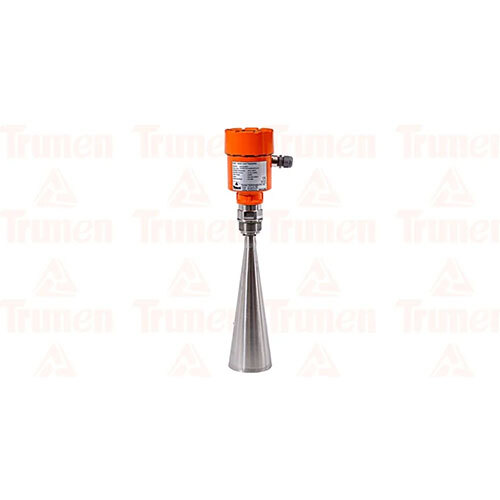
- Liquids with lower dielectric constant or liquids with wavy surface, best choice for measurement of storage tank with complicated inner structure
-
Features
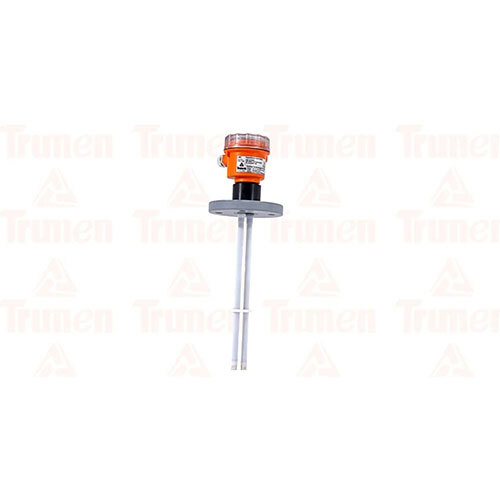
- Cable probe, two optional sensor types: for liquids or solids.
- Single rod probe
- Twin-cable probes
- Sensor for high temperature and high pressure. Single rod probe and coaxial probe are available for option
- PTFE Single rod probe
- Coaxial probe
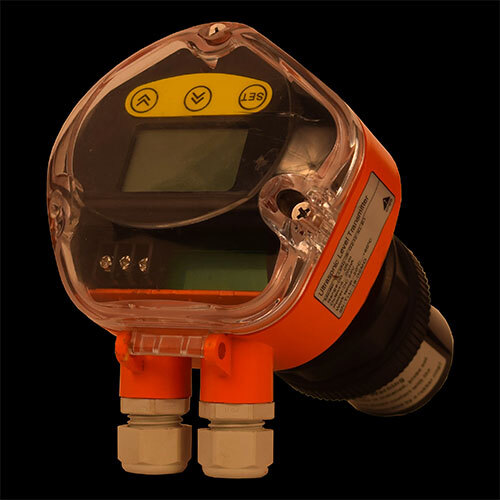
Robust and Versatile DesignBuilt from Stainless Steel 316, this transmitter is engineered for longevity and safety in harsh conditions. The IP68 protection ensures dust-tight and waterproof operation, while the explosion-proof option meets stringent ATEX/IECEx standards. Its ability to function in ambient temperatures from -20C to +60C makes it ideal for industrial facilities across India.
Advanced Measurement TechnologyEmploying Guided Wave Radar with a dielectric constant range of 1.5, the transmitter excels at continuous liquid level monitoring regardless of tank shape or fluid properties. Its high accuracy (5mm) and fast response time under one second allow for real-time process control.
Flexible Integration and OperationReady for both flanged or threaded mounting, this device fits seamlessly into vertical installations in new or existing tanks. The 4-20mA output with HART protocol ensures easy communication with standard control systems, while the optional LCD display allows on-site configuration and status checks.
FAQ's of Guided Wave Radar Level Transmitter:
Q: How does the Guided Wave Radar Level Transmitter measure liquid levels?
A: The device uses Time Domain Reflectometry (TDR) technology, where radar pulses are sent along a probe and reflected by the liquid surface. The time taken for the signal to return determines the exact liquid level, ensuring continuous, contact-based measurement.
Q: What types of liquids can be monitored with this transmitter?
A: This transmitter is suitable for a broad range of liquids, including water, oil, chemicals, acids, and any liquid with a dielectric constant of 1.5 or higher. It handles challenging process conditions, making it versatile across industries.
Q: When should explosion-proof models be considered?
A: Explosion-proof variants, compliant with ATEX/IECEx standards, should be used when the transmitter is installed in hazardous areas where flammable gases or vapors may be present, ensuring operational safety and regulatory compliance.
Q: Where can this level transmitter be installed?
A: Designed for vertical mounting, the transmitter can be installed in tanks, vessels, or silos within process industries such as chemical plants, water treatment facilities, refineries, and other industrial environments requiring robust level monitoring.
Q: What is the process for integrating this transmitter into existing systems?
A: Integration is straightforward; the transmitter can be mounted using flanged or threaded connections and powered by a 24V DC supply. The 4-20mA output with HART protocol enables easy connection to field instrumentation or plant DCS/PLC systems.
Q: What are the benefits of using a Guided Wave Radar Level Transmitter?
A: Benefits include high accuracy (5mm), rapid response time (<1 second), reliable operation in extreme temperatures and pressures, resistance to buildup and turbulence, and low maintenance compared to traditional mechanical level sensors.







 Send Inquiry
 Send Inquiry
 Send SMS
