Welcome to Our Company -

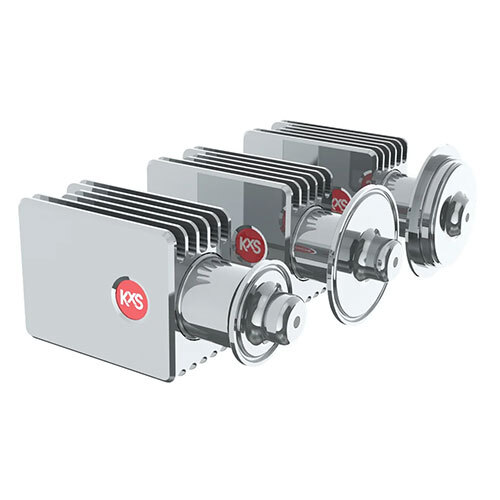
Product Details:
- Automation Grade Automatic
- Resolution 0.01 Brix
- Humidity 095% RH (non-condensing)
- Display Type Digital LED Display
- Measuring Range 0-20 Brix
- Response Time <2 seconds
- Max Height 220 mm
X
SS DCM-20 Inline Brix Transmitter Product Specifications
- 0C to 60C
- 220 mm
- Sugar Content / Brix Monitoring in Beverages, Food and Pharmaceutical Processing
- 24V DC
- <2 seconds
- 0-20 Brix
- Digital LED Display
- Inline Tri-Clamp Mount
- 4-20 mA, RS485 Modbus
- 24V DC
- Automatic
- 3.8 kg
- 095% RH (non-condensing)
- Inline Brix Transmitter
- Stainless Steel Body, Inline Installation, Easy Calibration, CIP/SIP Compatible
- 1.5 Tri-Clamp
- Automatic
- Continuous Inline Liquid Measurement
- 0.1 Brix
- 0.01 Brix
- RoHS, FDA Wet Parts
- PG9/PG13.5
- Tri-Clamp, Flange (optional)
- Polished
- SS 316L Stainless Steel
- IP65
- 4-20 mA, RS485 Digital
- Manual or Automatic
- Refractive Index Sensor
- Optional
- 110 bar
- Local (on body)
Product Description
NLINE BRIX MONITOR DCM-20 WITH HYGIENIC PROCESS CONNECTIONS
- Define liquid product interfaces in beverage and dairy products filling lines.
- Achieve and ensure product quality in sugar dissolving, juice blending and jam vessels.
- Correlate membrane filtration efficiency of protein and whey separation in Ultra Filtration systems.
- Optimize steam feed in dairy evaporation processes.
Robust Hygienic Design
Engineered with SS 316L stainless steel and polished housing, the SS DCM-20 ensures long-term durability and hygiene, essential for beverage, food, and pharmaceutical process lines. It meets FDA and RoHS compliance standards for wet parts, supporting stringent industry requirements and clean-in-place (CIP/SIP) operations without compromising reliability.
Advanced Sensing and Data Communication
Equipped with a high-precision refractive index sensor, the transmitter delivers rapid measurements (response time <2 seconds) and supports both analog (4-20 mA) and digital (RS485 Modbus) signals for seamless process integration. Optional data logging extends process traceability and quality assurance, enhancing operational efficiency.
Flexible Installation and Operation
The SS DCM-20's inline Tri-Clamp mounting, optional flange, and compact footprint (max height 220 mm) ensure easy integration into existing lines. Its digital LED display provides local monitoring, while automatic control mode, simple calibration options, and multiple cable entries (PG9/PG13.5) make setup and maintenance straightforward.
FAQ's of SS DCM-20 Inline Brix Transmitter:
Q: How does the SS DCM-20 Inline Brix Transmitter measure sugar content in liquids?
A: The device uses a refractive index sensor to determine the Brix value, representing sugar concentration in real time. As liquid flows through the inline unit, changes in refractive index are converted into precise digital Brix readings displayed locally and available via output interfaces.Q: What methods are available for calibrating the transmitter, and how often is calibration necessary?
A: Calibration can be performed either manually through the onboard controls or automatically using reference solutions. The recommended calibration frequency depends on process requirements and system stability, but regular scheduled checks ensure optimal accuracy and compliance with quality standards.Q: In which industries and applications can the SS DCM-20 be installed?
A: Designed for use in beverage, food, and pharmaceutical processing, the transmitter is ideal for continuous inline monitoring of sugar concentration (Brix) in production lines, ensuring consistent product quality and process control.Q: Where can this transmitter be mounted within a process system?
A: It is installed inline via a Tri-Clamp connection or optional flange, typically at points in the process stream where real-time Brix monitoring is most beneficial, such as after mixing, dilution, or evaporation stages in liquid production lines.Q: What are the main benefits of using this device in process automation?
A: Operators benefit from continuous, accurate Brix monitoring without manual sampling, improved product consistency, compliance with hygienic standards, CIP/SIP compatibility, and straightforward integration with existing control systems through versatile analog and digital interfaces.Q: What is the recommended usage environment for the SS DCM-20?
A: The transmitter is rated for operation in environments with temperatures from 0C to 60C, humidity up to 95% RH (non-condensing), and pressures between 1-10 bar, making it suited for industrial liquid processing conditions.Tell us about your requirement

Price:
Quantity
Select Unit
- 50
- 100
- 200
- 250
- 500
- 1000+
Additional detail
Mobile number
Email



Contact Details

- Shop No: 303-304, Block - C, 3rd Floor, Pushp Business Campus, S P Ring Road, Vastral, Ahmedabad - 382418, Gujarat, India
- Phone : 08045478447
GST : 24AAJCP7915M1ZX

- Mr Ramnarayan Ajmera (Manager-Business Development)
- Mobile : 08045478447
- Send Inquiry
 Send Inquiry
Our Products
- Portable Temperature Datalogger
- Air Flow And Velocity Transmitter
- Vibration Sensors
- Differential Pressure Transmitter
- Wireless Sensors & Transmitters
- Digital Manometer
- Low Pressure Generator & Calibrators
- Chart Recorder
- Pressure Gauge
- Temperature & Humidity Transmitter
- Carbon Dioxide Transmitter
- VOC Transmitter
- Infrared Temperature Sensors And Pyrometers
- Pressure Transmitter
- RTD Temperature Probes
- Temperature Transmitters
- Differential Presure Switch
- Indicator Controller Transmitters
- Level Transmitter Solid & Liquid
- Milk Silo Level Transmitters
- Point Level Switch - Solid & Liquid
- Pressure Switch
- Flow measuring Devices (Pitot Tube)
- Ozone Analyzer
- Inline Optical Brix Transmitter
- PH-ORP Electrode
- pH Probe housings & accessories
- Probe Housing
- Turbidity Sensor
- Temperature And Humidity Transmitter
- Infrared Temperature Sensors
- Process PID Controller
- Profile Controllers
- Control Unit Of Pneumatic Retractable Ph Housings
- Smart Positiong Drive
- Thyristor Power Controller
- Digital Temperature Switch
- Handheld Digital Probe Thermometer
- Differential Pressure Gauge
- Digital Differential Pressure Gauge
- Gas Pressure Switch
- Vacuum Pressure Switches
- Boot Level Switch
- Hydrostatic Level Transmitter
- Pendulum Level Switch
- Clean Room Differential Pressure Indicator
- Differential Pressure & Flow Controller
- Pressure Gauges
- Digital Electronic Pressure Switch
- Draft Pressure Transmitter
- Chute Jam Level Switch
- Overflow Switch for Screw-Chain Conveyor
- Air Flow Switch
- Averaging Flow Sensor
- Plug-in Type
- Terminal Block Type
- Flow Indicators & Totalizer
- Portable Air Velocity meter
- Stack Air Velocity Transmitter
- Broken Bag Leak Detector
- Carbon Dioxide Transmitters
- Conductivity Transmitters
- Dissolved Oxygen Analyzer
- Duct smoke detector
- Filter monitoring
- Inline Process Refractometer
- Inline Total Solid (TS) Transmitter
- Optical Density Transmitter (Biomass)
- Immersion fittings
- Retractable housings - manual
- Retractable housings - pneumatic
- Static probe housings
- pH Transmitter & Controller
- Solid Flow Monitor
- Stack Dust Monitor (QAL 1 Certified)
- Indoor Air Quality Transmitter
- Particulate Matter Transmitter
- Digital Process Indicator
- Loadcell Indicator
- Hiperdrive Positioning Systems
- Positioning Systems 3 Series
- Other Positioning Systems
- ATEX Boot Level Switch
- ATEX Broken Bag Leak Detector
- ATEX Flameproof Air Differential Pressure Switch
- ATEX IR Temperature Sensors
- ATEX Membrane Level Switch
- ATEX Pendulum Level Switch
- ATEX Pressure Switch 901P EX
- ATEX vibration sensor
- Flameproof Level Switches & Transmitters
- Flameproof Pressure Transmitter
- Building Controllers
- Digital Portable Manometer
- ORP Transmitters
- Free Chlorine Analyzer
- Total Chlorine Analyzer
- Chlorine Dioxide Analyzer
- Integrated BLDC Motor
- ATEX Differential Pressure Switch 930 EX
- CO2 Transmitter
 Send Inquiry
 Send SMS
 Call Me Free
PARSHVI TECHNOLOGY (INDIA) PRIVATE LIMITED
All Rights Reserved.(Terms of Use)
Developed and Managed by Infocom Network Private Limited.
Developed and Managed by Infocom Network Private Limited.
