Welcome to Our Company -

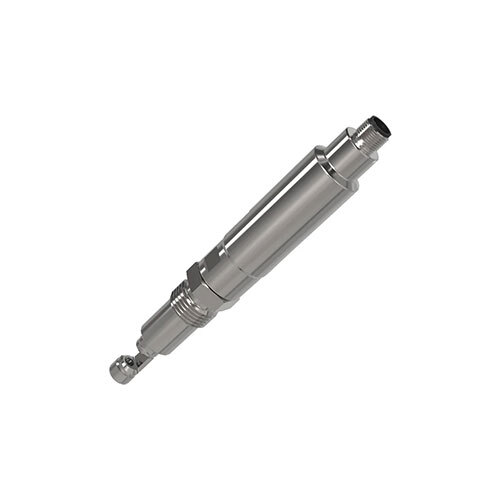
Product Details:
- Response Time < 2 seconds
- Temperature Operating: 0C to +60C
- Automation Grade Automatic
- Display Type LED indicators / External Display (optional)
- Resolution 0.01 NTU
- Interface Type 4-20 mA, RS485 (MODBUS)
- Accuracy 2% of reading
X
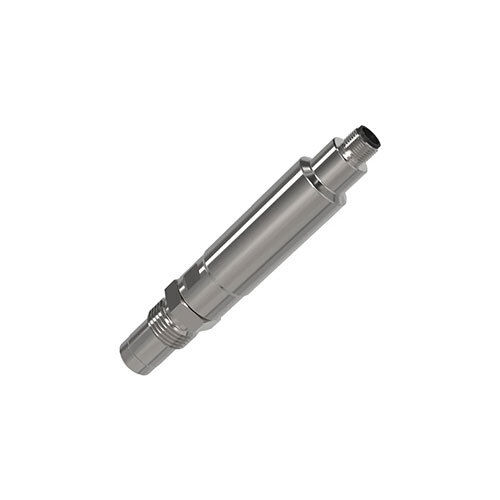
EXplore 131 Compact Turbidity Sensor Product Specifications
- Compact Turbidity Sensor
- 095% RH (non-condensing)
- Compact, Maintenance-Free, Digital Output, Field Calibratable
- 0 4000 NTU
- Online Turbidity Measurement in Water & Wastewater
- 12 24 V DC
- Approximately 180g
- Submersible / Flow Cell
- 12 24 V DC
- LED indicators / External Display (optional)
- Automatic
- < 2 seconds
- Operating: 0C to +60C
- 4-20 mA, RS485 (MODBUS)
- 2% of reading
- 0.01 NTU
- Continuous Online Turbidity Monitoring
- Digital
- 860 nm
- ISO 7027
- Standard 5 meters (customizable)
- IP68 (Fully Waterproof)
- 316L Stainless Steel / PVC
- Diameter 26mm, Length 167mm
- Formazin, field-calibratable
- Infrared Scattering & Absorption
- -20C to +70C
Product Description
| Max. measuring range: | 0-100 % |
| Resolution: | 0,1 % |
| Accuracy: | 1 % from measurement value |
| Reproducibility: | 1 % from final value |
| Wavelength: | 850 nm |
| Light source: | LED |
| Optical path length: | 10 mm or 20 mm |
| Surface: | e-polished Ra <0,37 m |
| Window: | Sapphire |
| Supply voltage: | 24 V DC |
| Process connection: | Thread G1/2 |
| Process temperature: | -1090 C, 135 C max. 1 hour (SIP cycle) |
| Process pressure: | max. 10 bar (150 psi) |
| Electrical connection: | M12 connector 5-pin |
| Interfaces: | 420 mA |
| Protection class: | IP69 (incl. connection cable) |
Reliable Online Turbidity Measurement
EXplore 131 offers dependable and accurate turbidity measurements for water and wastewater treatment. Its infrared technology and Formazin calibration provide stable, field-calibratable results, making it suitable for continuous automatic monitoring in diverse conditions.
Robust and Versatile Design
Designed with a 316L stainless steel or PVC body, the sensor withstands harsh environments with IP68 waterproof protection. Its compact structure, customizable cable length, and simple mounting options offer versatility and ease of installation.
Advanced Digital Connectivity
Equipped with digital outputs, including 4-20 mA and RS485 MODBUS, EXplore 131 integrates effortlessly into automated systems. LED indicators and optional external display enhance usability, while rapid response time (<2 seconds) ensures timely data acquisition.
FAQ's of EXplore 131 Compact Turbidity Sensor:
Q: How does the EXplore 131 Compact Turbidity Sensor perform calibration?
A: Calibration is conducted using Formazin standard solutions and can be completed in the field to ensure accurate turbidity measurements. This process maintains compliance with ISO 7027 standards for reliable operation.Q: What environments can the sensor be used in?
A: Thanks to its IP68 waterproof rating and wide operating temperature range (0C to +60C), the sensor is ideal for both submersible and flow cell installations in water treatment plants, wastewater facilities, and other industrial online monitoring applications.Q: When should I choose 316L stainless steel or PVC body for the sensor?
A: The choice depends on your process requirements. Use 316L stainless steel for corrosive or demanding conditions, while PVC is suitable for less aggressive media to reduce cost and weight.Q: Where is EXplore 131 typically installed?
A: It is commonly installed in water treatment or wastewater facilities, either submersed directly in tanks and basins or integrated into flow cells for continuous, automated online measurement.Q: What are the sensor's main benefits for water quality monitoring?
A: EXplore 131 provides precise, real-time turbidity data with a fast response time of less than 2 seconds. It is maintenance-free, field-calibratable, and integrates smoothly into digital automation systems for efficient process control.Q: How do I connect the sensor to my automation system?
A: The sensor supports digital interfaces such as 4-20 mA and RS485 MODBUS, allowing easy integration with a variety of data acquisition and control equipment. External display options are available for onsite visualization.Q: What is the usage process for continuous turbidity monitoring?
A: Install the sensor using submersible or flow cell mounting, connect the power supply (12-24 V DC), calibrate with Formazin solution, and integrate with the preferred output interface. The sensor then provides automated, real-time turbidity measurements for ongoing water quality management.Tell us about your requirement

Price:
Quantity
Select Unit
- 50
- 100
- 200
- 250
- 500
- 1000+
Additional detail
Mobile number
Email

Other Products in 'Turbidity Sensor' category



Contact Details

- Shop No: 303-304, Block - C, 3rd Floor, Pushp Business Campus, S P Ring Road, Vastral, Ahmedabad - 382418, Gujarat, India
- Phone : 08045478447
GST : 24AAJCP7915M1ZX

- Mr Ramnarayan Ajmera (Manager-Business Development)
- Mobile : 08045478447
- Send Inquiry
 Send Inquiry
Our Products
- Portable Temperature Datalogger
- Air Flow And Velocity Transmitter
- Vibration Sensors
- Differential Pressure Transmitter
- Wireless Sensors & Transmitters
- Digital Manometer
- Low Pressure Generator & Calibrators
- Chart Recorder
- Pressure Gauge
- Temperature & Humidity Transmitter
- Carbon Dioxide Transmitter
- VOC Transmitter
- Infrared Temperature Sensors And Pyrometers
- Pressure Transmitter
- RTD Temperature Probes
- Temperature Transmitters
- Differential Presure Switch
- Indicator Controller Transmitters
- Level Transmitter Solid & Liquid
- Milk Silo Level Transmitters
- Point Level Switch - Solid & Liquid
- Pressure Switch
- Flow measuring Devices (Pitot Tube)
- Ozone Analyzer
- Inline Optical Brix Transmitter
- PH-ORP Electrode
- pH Probe housings & accessories
- Probe Housing
- Turbidity Sensor
- Temperature And Humidity Transmitter
- Infrared Temperature Sensors
- Process PID Controller
- Profile Controllers
- Control Unit Of Pneumatic Retractable Ph Housings
- Smart Positiong Drive
- Thyristor Power Controller
- Digital Temperature Switch
- Handheld Digital Probe Thermometer
- Differential Pressure Gauge
- Digital Differential Pressure Gauge
- Gas Pressure Switch
- Vacuum Pressure Switches
- Boot Level Switch
- Hydrostatic Level Transmitter
- Pendulum Level Switch
- Clean Room Differential Pressure Indicator
- Differential Pressure & Flow Controller
- Pressure Gauges
- Digital Electronic Pressure Switch
- Draft Pressure Transmitter
- Chute Jam Level Switch
- Overflow Switch for Screw-Chain Conveyor
- Air Flow Switch
- Averaging Flow Sensor
- Plug-in Type
- Terminal Block Type
- Flow Indicators & Totalizer
- Portable Air Velocity meter
- Stack Air Velocity Transmitter
- Broken Bag Leak Detector
- Carbon Dioxide Transmitters
- Conductivity Transmitters
- Dissolved Oxygen Analyzer
- Duct smoke detector
- Filter monitoring
- Inline Process Refractometer
- Inline Total Solid (TS) Transmitter
- Optical Density Transmitter (Biomass)
- Immersion fittings
- Retractable housings - manual
- Retractable housings - pneumatic
- Static probe housings
- pH Transmitter & Controller
- Solid Flow Monitor
- Stack Dust Monitor (QAL 1 Certified)
- Indoor Air Quality Transmitter
- Particulate Matter Transmitter
- Digital Process Indicator
- Loadcell Indicator
- Hiperdrive Positioning Systems
- Positioning Systems 3 Series
- Other Positioning Systems
- ATEX Boot Level Switch
- ATEX Broken Bag Leak Detector
- ATEX Flameproof Air Differential Pressure Switch
- ATEX IR Temperature Sensors
- ATEX Membrane Level Switch
- ATEX Pendulum Level Switch
- ATEX Pressure Switch 901P EX
- ATEX vibration sensor
- Flameproof Level Switches & Transmitters
- Flameproof Pressure Transmitter
- Building Controllers
- Digital Portable Manometer
- ORP Transmitters
- Free Chlorine Analyzer
- Total Chlorine Analyzer
- Chlorine Dioxide Analyzer
- Integrated BLDC Motor
- ATEX Differential Pressure Switch 930 EX
- CO2 Transmitter
 Send Inquiry
 Send SMS
PARSHVI TECHNOLOGY (INDIA) PRIVATE LIMITED
All Rights Reserved.(Terms of Use)
Developed and Managed by Infocom Network Private Limited.
Developed and Managed by Infocom Network Private Limited.
