Welcome to Our Company -

Product Details:
- Features Compact design, hygienic process connection, maintenance-free optical window
- Power Supply 24 V DC 10%
- Humidity Max. 95% RH, non-condensing
- Measuring Range 0 to 100% backscattering (configurable for application)
- Application Inline turbidity, concentration and phase separation measurement in liquids
- Response Time <1 second
- Max Height approx. 110 mm (sensor body length)
X
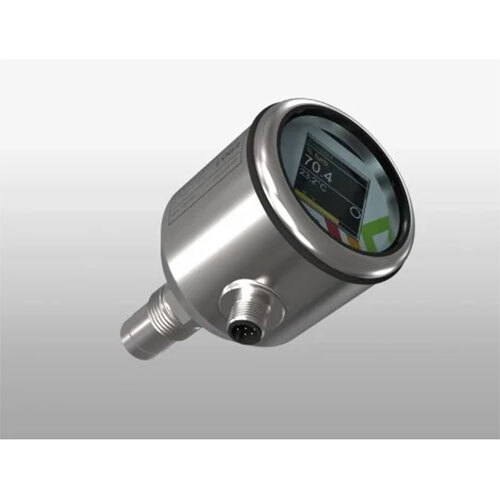
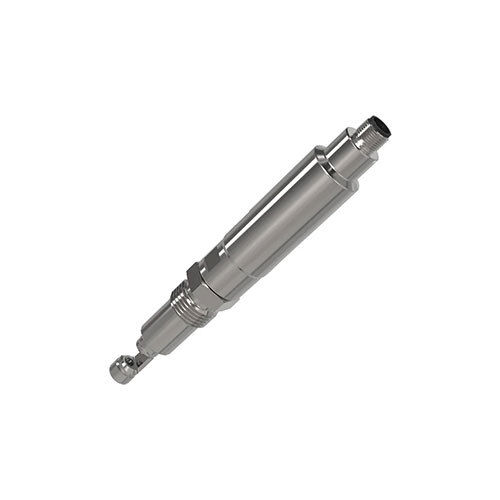
EXspect 271 NIR backscattering sensor in compact design Product Specifications
- 1% of full scale (application dependent)
- LED indicators (optional external display unit)
- Automatic continuous monitoring
- approx. 1.5 kg
- approx. 110 mm (sensor body length)
- 4...20 mA analog, Modbus RTU (RS485), digital output
- NIR Backscattering Sensor
- Process analytics, concentration and turbidity monitoring
- Automatic continuous measurement
- 0.01% backscattering
- 24 V DC
- Max. 95% RH, non-condensing
- Compact design, hygienic process connection, maintenance-free optical window
- 24 V DC 10%
- Process: 0 to +90 C (optionally up to 130 C for sterilization)
- Inline (in-pipe or vessel wall mounting)
- <1 second
- G 1/2 hygienic connection (various adapters available)
- Inline turbidity, concentration and phase separation measurement in liquids
- 0 to 100% backscattering (configurable for application)
- Factory calibrated, field calibration possible via software
- IP69K (suitable for wash-down environments)
- CIP/SIP compatible, maintenance-free operation
- LED, near infrared (NIR)
- Analog 4...20 mA, digital Modbus RTU
- Parameterization and calibration via PC software
- Dairies, breweries, beverage industry, chemical and pharmaceutical production
- <3 W
- -10 to +60C
- Stainless steel, sapphire
- Sapphire (robust and chemically resistant)
- Stainless steel 1.4404 (AISI 316L)
Product Description
| Measuring range max. | 0-100 % |
| Resolution | 0,1 % |
| Accuracy | 1,5 % from measurement value |
| Reproducibility | 1 % from final value |
| Wavelength | 850 nm |
| Light source | LED |
| Material | Stainless steel 1.4435 (316L) |
| Surface | e-polished Ra <0,37 m |
| Lens | Sapphire |
| Supply voltage | 24 V DC |
| Contact | NO or NC configurable 150 mA |
| Input contact | zeroing |
| Process connection | Thread G1/2 |
| Process temperature | 0 90 C, 141 C max. 2 hours (SIP cycle) |
| Process pressure | max. 16 bar (235 psi) |
| Electrical connection | M12 connector 5-pin or 8-pin (digital parameterizable) |
| Cable length | 2 m / 5 m |
| Interfaces | 4 20 mA with add. switching contact |
| Parameterization | Software EXpert |
| Protection class | IP69 |
High-Precision Inline Liquid Analysis
EXspect 271 delivers accurate, real-time monitoring of turbidity and concentration directly within your processes. Its measurement range from 0 to 100% backscattering, with resolution down to 0.01%, ensures precise analytics for process control and quality assurance in various industrial environments.
Robust and Hygienic Construction for Demanding Applications
Engineered with stainless steel (AISI 316L) and sapphire wetted parts, the sensor withstands aggressive cleaning regimes, extreme temperatures, and corrosive conditions. IP69K protection and CIP/SIP compatibility make it ideal for food, beverage, chemical, and pharmaceutical production.
Effortless Installation and Continuous Operation
The compact, maintenance-free sensor mounts easily in pipes or vessel walls, offering automatic, continuous monitoring with a quick response time (<1 second). Its low power consumption and versatile output interfaces ensure reliable integration into modern process control systems.
FAQ's of EXspect 271 NIR backscattering sensor in compact design:
Q: How is the EXspect 271 NIR backscattering sensor installed in a process line?
A: This sensor is designed for inline mounting, fitting directly into pipes or vessel walls using its G 1/2 hygienic connection. Various adapters are available, making installation flexible and straightforward for diverse plant configurations.Q: What applications can benefit from using the EXspect 271 sensor?
A: Ideal for dairies, breweries, beverage manufacturing, and chemical or pharmaceutical production, this sensor provides accurate turbidity, concentration, and phase separation measurements, supporting process analytics and high-quality production standards.Q: When should the sensor be cleaned, and what cleaning methods are compatible?
A: The sensor window is maintenance-free and designed for compatibility with CIP (Cleaning-In-Place) and SIP (Sterilization-In-Place) procedures. Routine cleaning follows standard plant practices, helping maintain reliable, long-term operation without manual intervention.Q: Where does the sensor perform optimally regarding temperature and humidity?
A: It functions within ambient temperatures of -10 to +60C and process temperatures up to 90C (optionally 130C for sterilization). Its design tolerates up to 95% relative humidity (non-condensing), making it suitable for demanding industrial environments.Q: How does field calibration and parameterization work with the EXspect 271?
A: The sensor is factory calibrated for immediate use but supports field calibration for environment-specific tuning via PC software. This allows convenient adjustments for different process requirements through a digital interface.Q: What are the main benefits of using the EXspect 271 sensor in automated processes?
A: Users gain reliable, continuous turbidity and concentration monitoring with high accuracy (1% full scale). Its robust, hygienic design and maintenance-free operation reduce downtime, while versatile digital and analog outputs enable streamlined process automation and data management.Q: What output signals and interface options does the EXspect 271 provide for system integration?
A: This sensor features analog (4-20 mA) and digital (Modbus RTU, RS485) outputs, along with optional LED indicators or external display units, ensuring seamless integration with modern PLCs and SCADA systems for real-time process control.Tell us about your requirement

Price:
Quantity
Select Unit
- 50
- 100
- 200
- 250
- 500
- 1000+
Additional detail
Mobile number
Email

Other Products in 'Turbidity Sensor' category



Contact Details

- Shop No: 303-304, Block - C, 3rd Floor, Pushp Business Campus, S P Ring Road, Vastral, Ahmedabad - 382418, Gujarat, India
- Phone : 08045478447
GST : 24AAJCP7915M1ZX

- Mr Ramnarayan Ajmera (Manager-Business Development)
- Mobile : 08045478447
- Send Inquiry
 Send Inquiry
Our Products
- Portable Temperature Datalogger
- Air Flow And Velocity Transmitter
- Vibration Sensors
- Differential Pressure Transmitter
- Wireless Sensors & Transmitters
- Digital Manometer
- Low Pressure Generator & Calibrators
- Chart Recorder
- Pressure Gauge
- Temperature & Humidity Transmitter
- Carbon Dioxide Transmitter
- VOC Transmitter
- Infrared Temperature Sensors And Pyrometers
- Pressure Transmitter
- RTD Temperature Probes
- Temperature Transmitters
- Differential Presure Switch
- Indicator Controller Transmitters
- Level Transmitter Solid & Liquid
- Milk Silo Level Transmitters
- Point Level Switch - Solid & Liquid
- Pressure Switch
- Flow measuring Devices (Pitot Tube)
- Ozone Analyzer
- Inline Optical Brix Transmitter
- PH-ORP Electrode
- pH Probe housings & accessories
- Probe Housing
- Turbidity Sensor
- Temperature And Humidity Transmitter
- Infrared Temperature Sensors
- Process PID Controller
- Profile Controllers
- Control Unit Of Pneumatic Retractable Ph Housings
- Smart Positiong Drive
- Thyristor Power Controller
- Digital Temperature Switch
- Handheld Digital Probe Thermometer
- Differential Pressure Gauge
- Digital Differential Pressure Gauge
- Gas Pressure Switch
- Vacuum Pressure Switches
- Boot Level Switch
- Hydrostatic Level Transmitter
- Pendulum Level Switch
- Clean Room Differential Pressure Indicator
- Differential Pressure & Flow Controller
- Pressure Gauges
- Digital Electronic Pressure Switch
- Draft Pressure Transmitter
- Chute Jam Level Switch
- Overflow Switch for Screw-Chain Conveyor
- Air Flow Switch
- Averaging Flow Sensor
- Plug-in Type
- Terminal Block Type
- Flow Indicators & Totalizer
- Portable Air Velocity meter
- Stack Air Velocity Transmitter
- Broken Bag Leak Detector
- Carbon Dioxide Transmitters
- Conductivity Transmitters
- Dissolved Oxygen Analyzer
- Duct smoke detector
- Filter monitoring
- Inline Process Refractometer
- Inline Total Solid (TS) Transmitter
- Optical Density Transmitter (Biomass)
- Immersion fittings
- Retractable housings - manual
- Retractable housings - pneumatic
- Static probe housings
- pH Transmitter & Controller
- Solid Flow Monitor
- Stack Dust Monitor (QAL 1 Certified)
- Indoor Air Quality Transmitter
- Particulate Matter Transmitter
- Digital Process Indicator
- Loadcell Indicator
- Hiperdrive Positioning Systems
- Positioning Systems 3 Series
- Other Positioning Systems
- ATEX Boot Level Switch
- ATEX Broken Bag Leak Detector
- ATEX Flameproof Air Differential Pressure Switch
- ATEX IR Temperature Sensors
- ATEX Membrane Level Switch
- ATEX Pendulum Level Switch
- ATEX Pressure Switch 901P EX
- ATEX vibration sensor
- Flameproof Level Switches & Transmitters
- Flameproof Pressure Transmitter
- Building Controllers
- Digital Portable Manometer
- ORP Transmitters
- Free Chlorine Analyzer
- Total Chlorine Analyzer
- Chlorine Dioxide Analyzer
- Integrated BLDC Motor
- ATEX Differential Pressure Switch 930 EX
- CO2 Transmitter
 Send Inquiry
 Send SMS
PARSHVI TECHNOLOGY (INDIA) PRIVATE LIMITED
All Rights Reserved.(Terms of Use)
Developed and Managed by Infocom Network Private Limited.
Developed and Managed by Infocom Network Private Limited.
