Welcome to Our Company -

Product Details:
- Features Auto clamp, Data storage, Printer output
- Automation Grade Semi-Automatic
- Humidity 20-98% RH
- Specimen Size Standard/Customizable
- Temperature 10C~40C
- Max Height 450 mm
- Measuring Range 0~99.99
X
EXstatic 340 Product Specifications
- PLC Touch Screen Control
- 50/60 Hz
- About 23kg
- Static Dissipative Tester
- 0.6~0.8 MPa
- Standard 8mm connector
- 450 mm
- 0~99.99
- 1% of full scale
- Standard/Customizable
- 10C~40C
- 0.5-5 mm/min (adjustable)
- Auto clamp, Data storage, Printer output
- 20-98% RH
- Semi-Automatic
- DC 5V (internal sensors)
- 300 mm
- 0.01
- Digital Touch Screen
- Up to 3
- 340 mm
- Static dissipation of filter materials, textiles, nonwoven
- Lab/Industrial
- Tabletop
- RS232/USB
- 340 mm wide
- AC 220V 10%, 50Hz
- 1-100 N
- 2s
- 23 kg
- Windows Data Analysis Software
- Overload and Emergency Stop
- Adjustable 1-999s
- 550 430 760 mm (L W H)
- One-Key Automatic Calibration
- English/Chinese
- Up to 10,000 Groups
- Built-in Thermal Printer
Product Description
Advantage
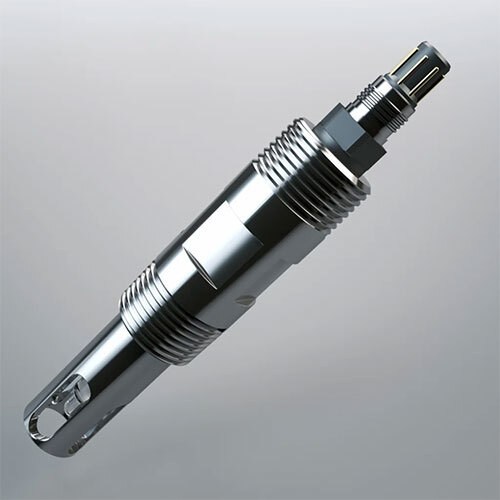
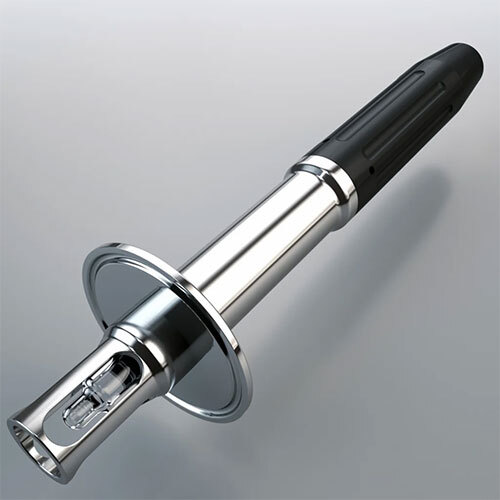
- Replacement for US-sensors with NPT-thread
- Stainless steel AISI 316L / 1.4404 / PVDF / PP
- Sealing compounds EPDM / FPM (Viton) / FFKM (Kalrez)
- Process connection NPT 3/4 or 1
- Optional sensor protection cage
- Up to 10 bar and 140 C
Specification
Process pressure: | 010 bar |
| Process temperature: | -10140 C |
| Material: | 1.4404 / 316L, PP or PVDF |
| Surface: | Ra<0,78 |
| Sealing material: | EPDM, FPM (Viton) or FFKM (Kalrez) |
| Certificates: | material, sealing compound |
| Option: | with or without protection cage |
| Process connection: | NPT 3/4 oder NPT 1 |
| Sensors: | 120 mm 12 PG13,5 |
Wide Application and Automated Operation
EXstatic 340 is engineered for static dissipation tests on a variety of materials, such as filter media, textiles, and nonwovens. Its semi-automatic mechanism and digital touch interface simplify handling, while the robust PLC touch screen control allows precise configuration and repeatable results for laboratories and industry processors.
Advanced Features and Data Handling
This machine supports up to 10,000 data groups, offering extensive storage for experiments. With automatic one-key calibration and adjustable test settings, the EXstatic 340 ensures efficient workflows. Data can be easily exported or printed via the built-in thermal printer, and the Windows analysis software supports deeper insight into testing results.
Reliable Safety and Accurate Measurements
Safety is prioritized with integrated overload protection and emergency stop function, ensuring operator security during testing. The EXstatic 340's measurement capabilities provide a broad range from 0 to 99.99, accurate to within 1% of full scale, making it a dependable instrument for quality assurance in static dissipation performance.
FAQ's of EXstatic 340:
Q: How can I adjust the test parameters on the EXstatic 340?
A: Test parameters, including speed (0.5-5 mm/min), stroke (up to 300 mm), and time (1-999s), are adjusted directly via the PLC touch screen. The user-friendly interface simplifies parameter changes for specific testing requirements.Q: What is the data storage capacity of the EXstatic 340, and how can I manage test data?
A: The EXstatic 340 can store up to 10,000 groups of test data. Data can be printed using the built-in thermal printer or exported to a computer through RS232/USB interface for analysis on Windows software.Q: When should I perform calibration, and how is it done?
A: Calibration should be performed before starting a series of tests or after significant equipment movement. The EXstatic 340 features one-key automatic calibration, initiated with a single touch to ensure optimal measurement accuracy.Q: Where is the EXstatic 340 typically used and for which applications?
A: This tester is widely used in laboratory and industrial environments in India and globally, primarily for assessing the static dissipation properties of filter materials, textiles, and nonwoven fabrics.Q: What safety features are provided during operation?
A: Operator safety is ensured through overload protection and an emergency stop function, allowing instantaneous shutdown and safeguarding against operational hazards.Q: How does the automation grade benefit my testing workflow?
A: Its semi-automatic operation-with auto clamp and adjustable, programmable settings-greatly reduces manual intervention, enhances consistency, and accelerates testing cycles, leading to improved lab productivity.Q: What is the benefit of built-in thermal printing on the EXstatic 340?
A: The built-in thermal printer enables immediate hard-copy documentation of test results, facilitating record-keeping and quick analysis directly at the point of testing.Tell us about your requirement

Price:
Quantity
Select Unit
- 50
- 100
- 200
- 250
- 500
- 1000+
Additional detail
Mobile number
Email

Other Products in 'Static probe housings' category



Contact Details

- Shop No: 303-304, Block - C, 3rd Floor, Pushp Business Campus, S P Ring Road, Vastral, Ahmedabad - 382418, Gujarat, India
- Phone : 08045478447
GST : 24AAJCP7915M1ZX

- Mr Ramnarayan Ajmera (Manager-Business Development)
- Mobile : 08045478447
- Send Inquiry
 Send Inquiry
Our Products
- Portable Temperature Datalogger
- Air Flow And Velocity Transmitter
- Vibration Sensors
- Differential Pressure Transmitter
- Wireless Sensors & Transmitters
- Digital Manometer
- Low Pressure Generator & Calibrators
- Chart Recorder
- Pressure Gauge
- Temperature & Humidity Transmitter
- Carbon Dioxide Transmitter
- VOC Transmitter
- Infrared Temperature Sensors And Pyrometers
- Pressure Transmitter
- RTD Temperature Probes
- Temperature Transmitters
- Differential Presure Switch
- Indicator Controller Transmitters
- Level Transmitter Solid & Liquid
- Milk Silo Level Transmitters
- Point Level Switch - Solid & Liquid
- Pressure Switch
- Flow measuring Devices (Pitot Tube)
- Ozone Analyzer
- Inline Optical Brix Transmitter
- PH-ORP Electrode
- pH Probe housings & accessories
- Probe Housing
- Turbidity Sensor
- Temperature And Humidity Transmitter
- Infrared Temperature Sensors
- Process PID Controller
- Profile Controllers
- Control Unit Of Pneumatic Retractable Ph Housings
- Smart Positiong Drive
- Thyristor Power Controller
- Digital Temperature Switch
- Handheld Digital Probe Thermometer
- Differential Pressure Gauge
- Digital Differential Pressure Gauge
- Gas Pressure Switch
- Vacuum Pressure Switches
- Boot Level Switch
- Hydrostatic Level Transmitter
- Pendulum Level Switch
- Clean Room Differential Pressure Indicator
- Differential Pressure & Flow Controller
- Pressure Gauges
- Digital Electronic Pressure Switch
- Draft Pressure Transmitter
- Chute Jam Level Switch
- Overflow Switch for Screw-Chain Conveyor
- Air Flow Switch
- Averaging Flow Sensor
- Plug-in Type
- Terminal Block Type
- Flow Indicators & Totalizer
- Portable Air Velocity meter
- Stack Air Velocity Transmitter
- Broken Bag Leak Detector
- Carbon Dioxide Transmitters
- Conductivity Transmitters
- Dissolved Oxygen Analyzer
- Duct smoke detector
- Filter monitoring
- Inline Process Refractometer
- Inline Total Solid (TS) Transmitter
- Optical Density Transmitter (Biomass)
- Immersion fittings
- Retractable housings - manual
- Retractable housings - pneumatic
- Static probe housings
- pH Transmitter & Controller
- Solid Flow Monitor
- Stack Dust Monitor (QAL 1 Certified)
- Indoor Air Quality Transmitter
- Particulate Matter Transmitter
- Digital Process Indicator
- Loadcell Indicator
- Hiperdrive Positioning Systems
- Positioning Systems 3 Series
- Other Positioning Systems
- ATEX Boot Level Switch
- ATEX Broken Bag Leak Detector
- ATEX Flameproof Air Differential Pressure Switch
- ATEX IR Temperature Sensors
- ATEX Membrane Level Switch
- ATEX Pendulum Level Switch
- ATEX Pressure Switch 901P EX
- ATEX vibration sensor
- Flameproof Level Switches & Transmitters
- Flameproof Pressure Transmitter
- Building Controllers
- Digital Portable Manometer
- ORP Transmitters
- Free Chlorine Analyzer
- Total Chlorine Analyzer
- Chlorine Dioxide Analyzer
- Integrated BLDC Motor
- ATEX Differential Pressure Switch 930 EX
- CO2 Transmitter
 Send Inquiry
 Send SMS
 Call Me Free
PARSHVI TECHNOLOGY (INDIA) PRIVATE LIMITED
All Rights Reserved.(Terms of Use)
Developed and Managed by Infocom Network Private Limited.
Developed and Managed by Infocom Network Private Limited.
