Welcome to Our Company -

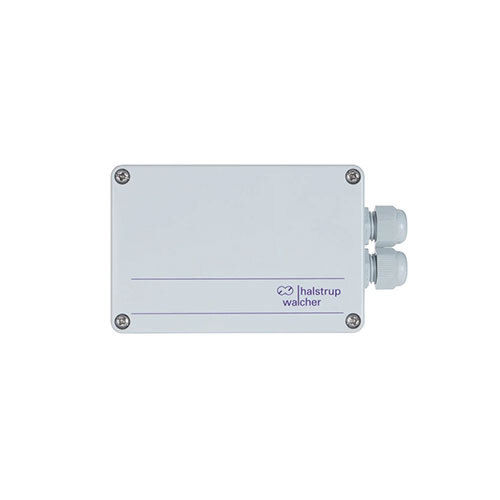
Product Details:
- Resolution 0.01 mm
- Humidity % 5% to 95% non-condensing
- Sensor Type Position Sensor
- Equipment Type Positioning System
- Application Media Industrial Automation
- Connectivity Type RS232/RS485
- Measurement Range 0 to 200 mm
X
Positioning system PSE Product Specifications
- -10°C to +60°C
- 0 to 200 mm
- Industrial Automation
- Digital LCD
- RS232/RS485
- Standard
- 24V DC
- IP65
- 25 mm
- Position Sensor
- 0-200 mm
- 5% to 95% non-condensing
- 0.01 mm
- ±0.1 mm
- Max 3W
- Aluminum Housing
- Positioning System
- For Linear and Rotary Positioning
- <10 ms
- approx. 0.85 kg
- LED status indicator
- Manual or Automatic
- Panel Mount or DIN Rail
- Relay, Analog Voltage
- 2 meters, extendable
Product Description
Nominal torque / Nominal rate speed
- PSE 200/1: 1 Nm / 30 rpm
- PSE 200/2: 5 Nm / 5 rpm
- PSE 200/3: 10 Nm / 2 rpm
- PSE 200/4: 10 Nm / 1 rpm
- PSE 200/5: 10 Nm / 0.5 rpm
- PSE 200/6: 10 Nm / 0.25 rpm
Default analogue target value
- 0 .. 10 V, 0/4 .. 20 mA
Position report
- 0 .. 10 V
Positioning accuracy
- 2% of positioning range
Output shaft
- 12 mm solid shaft
Positioning range
- max. 50 rotations
Supply voltage
- 24 VDC
Protection class
- IP 55
High Precision and Rapid Responsiveness
Engineered for accurate measurement, the Positioning System PSE boasts a resolution of 0.01 mm and accuracy of 0.1 mm. Its fast response time - under 10 ms - ensures dependable performance for high-speed linear and rotary positioning in industrial environments, boosting production efficiency and consistency.
Multiple Installation and Operation Options
This system provides straightforward panel mount or DIN rail installation, adapting easily to varied industrial setups. Operation can be switched between manual and automatic modes, allowing users the flexibility to tailor control to application needs. The durable 2-meter cable is extendable, increasing installation possibilities.
Robust Connectivity and Reliable Feedback
With RS232/RS485 connectivity and multiple output options (relay, analog voltage), integration into existing automation networks is seamless. The digital LCD display and LED status indicators provide clear, real-time feedback, enhancing monitoring and troubleshooting.
FAQ's of Positioning system PSE:
Q: How does the Positioning System PSE benefit industrial automation processes?
A: The PSE enhances automation by delivering high-precision linear and rotary positioning with rapid response (<10 ms), supporting better accuracy, efficiency, and reliability in motion control and material handling applications.Q: What steps are required to install the system on a production line?
A: Installation is simple; the system can be mounted on a panel or DIN rail. With an extendable 2-meter cable and an IP65-rated aluminum housing, it suits varied industrial setups. Power supply (24V DC) and output interfaces must be connected as per the integration requirements.Q: When should I use the manual versus automatic operating method?
A: Manual mode is ideal for initial setup, calibration, or maintenance, while automatic mode is recommended for continuous process applications where streamlined, hands-free operation is needed.Q: Where can this positioning system be implemented?
A: The PSE is suitable for a wide range of industrial automation scenarios, including linear actuators, rotary tables, and position-controlled assembly systems within factories or processing plants.Q: What is the process for connecting the output interfaces to other equipment?
A: Output connections are via relay, analog voltage, or RS232/RS485 interfaces. Simply connect the respective terminals or communication ports to compatible PLCs, controllers, or industrial PCs to enable data exchange and integration.Q: How does the IP65 protection rating benefit the system during operation?
A: The IP65 rating ensures robust resistance to dust and water ingress, allowing for reliable operation even in challenging industrial environments, thereby reducing maintenance needs and increasing equipment longevity.Tell us about your requirement

Price:
Quantity
Select Unit
- 50
- 100
- 200
- 250
- 500
- 1000+
Additional detail
Mobile number
Email

Other Products in 'Other Positioning Systems' category



Contact Details

- Shop No: 303-304, Block - C, 3rd Floor, Pushp Business Campus, S P Ring Road, Vastral, Ahmedabad - 382418, Gujarat, India
- Phone : 08045478447
GST : 24AAJCP7915M1ZX

- Mr Ramnarayan Ajmera (Manager-Business Development)
- Mobile : 08045478447
- Send Inquiry
 Send Inquiry
Our Products
- Portable Temperature Datalogger
- Air Flow And Velocity Transmitter
- Vibration Sensors
- Differential Pressure Transmitter
- Wireless Sensors & Transmitters
- Digital Manometer
- Low Pressure Generator & Calibrators
- Chart Recorder
- Pressure Gauge
- Temperature & Humidity Transmitter
- Carbon Dioxide Transmitter
- VOC Transmitter
- Infrared Temperature Sensors And Pyrometers
- Pressure Transmitter
- RTD Temperature Probes
- Temperature Transmitters
- Differential Presure Switch
- Indicator Controller Transmitters
- Level Transmitter Solid & Liquid
- Milk Silo Level Transmitters
- Point Level Switch - Solid & Liquid
- Pressure Switch
- Flow measuring Devices (Pitot Tube)
- Ozone Analyzer
- Inline Optical Brix Transmitter
- PH-ORP Electrode
- pH Probe housings & accessories
- Probe Housing
- Turbidity Sensor
- Temperature And Humidity Transmitter
- Infrared Temperature Sensors
- Process PID Controller
- Profile Controllers
- Control Unit Of Pneumatic Retractable Ph Housings
- Smart Positiong Drive
- Thyristor Power Controller
- Digital Temperature Switch
- Handheld Digital Probe Thermometer
- Differential Pressure Gauge
- Digital Differential Pressure Gauge
- Gas Pressure Switch
- Vacuum Pressure Switches
- Boot Level Switch
- Hydrostatic Level Transmitter
- Pendulum Level Switch
- Clean Room Differential Pressure Indicator
- Differential Pressure & Flow Controller
- Pressure Gauges
- Digital Electronic Pressure Switch
- Draft Pressure Transmitter
- Chute Jam Level Switch
- Overflow Switch for Screw-Chain Conveyor
- Air Flow Switch
- Averaging Flow Sensor
- Plug-in Type
- Terminal Block Type
- Flow Indicators & Totalizer
- Portable Air Velocity meter
- Stack Air Velocity Transmitter
- Broken Bag Leak Detector
- Carbon Dioxide Transmitters
- Conductivity Transmitters
- Dissolved Oxygen Analyzer
- Duct smoke detector
- Filter monitoring
- Inline Process Refractometer
- Inline Total Solid (TS) Transmitter
- Optical Density Transmitter (Biomass)
- Immersion fittings
- Retractable housings - manual
- Retractable housings - pneumatic
- Static probe housings
- pH Transmitter & Controller
- Solid Flow Monitor
- Stack Dust Monitor (QAL 1 Certified)
- Indoor Air Quality Transmitter
- Particulate Matter Transmitter
- Digital Process Indicator
- Loadcell Indicator
- Hiperdrive Positioning Systems
- Positioning Systems 3 Series
- Other Positioning Systems
- ATEX Boot Level Switch
- ATEX Broken Bag Leak Detector
- ATEX Flameproof Air Differential Pressure Switch
- ATEX IR Temperature Sensors
- ATEX Membrane Level Switch
- ATEX Pendulum Level Switch
- ATEX Pressure Switch 901P EX
- ATEX vibration sensor
- Flameproof Level Switches & Transmitters
- Flameproof Pressure Transmitter
- Building Controllers
- Digital Portable Manometer
- ORP Transmitters
- Free Chlorine Analyzer
- Total Chlorine Analyzer
- Chlorine Dioxide Analyzer
- Integrated BLDC Motor
- ATEX Differential Pressure Switch 930 EX
- CO2 Transmitter
 Send Inquiry
 Send SMS
PARSHVI TECHNOLOGY (INDIA) PRIVATE LIMITED
All Rights Reserved.(Terms of Use)
Developed and Managed by Infocom Network Private Limited.
Developed and Managed by Infocom Network Private Limited.
